A little bit about myself…I did my undergrad and graduate studies in Germany at the University of Göttingen. After I finished my PhD, I moved to New Haven, CT, to work as a researcher at Yale University. I myself am interested in brain networks that govern behavior. How they assemble, what do they look like and how they change behavior. I chose to work on the fruit fly Drosophila melanogaster, for the reason that they offer easy access to genetic manipulation, reproduce quickly, and most importantly, because the genes between human and flies are are similar. Just as an example, one of the most important genes regulating our sleep/wake cycles (the behavior the researchers in the Yale lab are working on), the gene period, was first discovered in a fly mutant. We and other labs all around the world are now using the genetic tools available for Drosophila to gain a better understanding of how genes shape this kind of behavior.
One of the most versatile tools we have in our arsenal is the GAL4/UAS-system (often referred to as the geneticists swiss army knife). With this system we are capable of expressing genes of interest in a defined subsets of cells (e.g. the nerve cells that are responsible for the daily rhythm of the fly). In this system we have two parts that regulate the expression of genes. One is the GAL4, which is a protein from yeast that activates transcription, but only of proteins found in yeast. What we do is to generate flies that have the gene for GAL4 in their genome. Then, we put a base pair sequence in front of the gene that would normally regulate the expression of a fly gene (this sequence is called a promoter), so that the GAL4 is now only expressed in the same cells that would also express the fly gene. Next, we generate a fly that has a copy of the gene for GFP in its genome. In front of this gene we put a UAS-sequence, this stands for Upstream-Activation-Sequence. The UAS-sequence is important because the GAL4-protein can bind to it and activate transcription of the GFP. If we now cross the two flies with each other the offspring will produce the GFP protein only in the cells in which the GAL4 protein is expressed. On the picture below you can see an illustration of how this technique works and an example that shows a fly brain in which GFP is expressed in very specific brain cells that are responsible for daily rhythms.

Why do you think it is better to have a two parted system for gene expression then just putting the GFP under the control of the promoter?
Over the last two decades laboratories all over the world generated thousands of fly strains that express GAL4 in different tissues and also thousands of flies that have different genes under the control of the UAS-sequence. From this, various genes and networks can be discovered that are important for such behaviors as sleep, learning, and decision making.
]]>
Photo by Chromalux
Many animals have a type of mating call which attracts the female to them in order to mate. If a female is attracted to a charismatic male and they produce offspring, would their offspring be attractive as well?
Scientists have been searching for evidence to be able to determine if attractiveness could be hereditary. To do this, scientists in England used the Drosophila simulans fruit fly. In this species, the female is attracted to the male by their personality and flirtations.
What kind of personality and flirtations? Well, the Drosophila male flies sometimes have a “courtship song” or a mating song that attracts the female to the male. The way that they produce these “songs” is by the movement of their wings. Certain patterns and pulses produce different types of “songs”.
Another way that makes the males attractive is the pheromones that are produced. Pheromones are sometimes sex-specific and are released by certain glands or cells to trigger the behavioral response of the opposite sex of the same species. Specialized sensory structures or cells recognize pheromones. The neurons are thought to be responsible for the detection of pheromones in Drosophila.
The scientists paired the males and females together and looked at the average time it took them to mate. By using common sense, if they mated quickly, such as 5 minutes, then they concluded that those males are attractive to the females. If it took a longer time to mate, then most likely they do not have as much charisma as the other flies.
The offspring (sons) of the flies were paired with single females. They repeated their step in observing the amount of time it took them to mate. Just like the scientists thought, the attractive males that they started with, in fact, DID produce attractive sons!
After seeing this, scientists wondered if this same idea could be spread across to all species. Does this mean attractiveness is hereditary in other insects or species as well?
David Hosken, an evolutionary biologist who worked on the study said, “Extrapolating from one species to another closely related species should be done with caution. Knowing lots about one species may tell you little about another. We must remember this when we make hypotheses of other species.”
Is this kind of attractiveness shown in Drosophila also hereditary in humans? What similarities do you notice between Drosophila and humans? Do you think it’s impossible to pull predictions about our species from Drosophila?

Jackie (the author of this post) examines a sample of anesthetized Drosophila melanogaster!
RNA interference (RNAi) is one of our bodies’ mechanisms for regulating genes. These RNAi molecules are programmed to detect foreign genes, mark them as viruses and destroy them (and anything that looks like them). This RNAi essentially silences specific genes and it is the body’s main way to ward off viruses. This one small mechanism regulates translation, transcription, chromatin structure, cell growth, and genome integrity. RNAi therapy can also reduce viral issues and can be a possible treatment for specific medical issues such as HIV, Cancer, and Arthritis.
Photo by Michael Kuhn
During the cell cycle, cells undergo regulation, which is crucial to the cells’ survival. Multiple mechanisms in the cell cycle work to restrain or activate cell division. There are checkpoints throughout the cell cycle where the cells are verified for sufficient amounts of nutrients and raw materials to progress through the next stage of the cycle. The three major checkpoints are G1, s, and G2. Density dependent inhibition is the process in which crowded cells stop dividing. Growth factors also help with regulation. These are proteins released by certain cells that stimulate other cells to divide.
Organisms regulate their body temperature in a way to reach homeostasis. This regulation is done through thermoregulation. For example, humans are endotherms who regulate their body temperature internally. When it is hot outside, humans go through a process called vasodilatation in which the capillaries are closer to the skin and it allows for a cooling effect. Humans also use sweating and bathing to reach homeostasis. When a human is cold, the capillaries undergo vasoconstriction in which the blood vessels shrink and have a warming effect.
Osmotic regulation of the blood is also essential for homeostasis. Marine animals are hyposmotic to their environment and they need to regulate the water in their blood, because they are constantly in a watery environment. These fish drink a lot, urinate rarely, and secrete salt through their gills to maintain homeostasis in water.
Regulation of a population occurs naturally and is outlined by Darwin’s focus on density dependent and density independent factors. Density dependent factors are directly because the size of the population. Food is a necessity for all animals and if there is not enough to sustain the population, then the population will decrease and become regulated. The predator prey relationship is also a major way for populations to be regulated. When a population increases there is then an increased amount of prey for predators, the predators will eat the prey, regulating the prey population. As all the prey are consumed, there is not enough food for the predators, and the predators will die off. Essentially the prey is also regulating the predator population. Density independent factors can also greatly effect and regulate a population. These factors included natural disasters like fire or floods that can harm a population.
Communities also experience regulation. A community is two or more populations living close enough together for a potential interaction. Interspecific interactions link species in a community. This regulates members of a community because the two species compete for resources and the result is detrimental to both of the species. The competitive exclusion principle also regulates communities. Two species with similar needs for the same living resource cannot coexists in the same place or occupy the same niche.
The entire biosphere also undergoes regulation to reach homeostasis. This is achieved through feedbacks. For example, when carbon dioxide levels in the atmosphere rise plants are able to grow better and then remove more carbon dioxide from the atmosphere. The Gaia principle is a hypothesis that states that the entire biosphere is working in junction to maintain climate and biochemical conditions to maintain a homeotic state. This principle regards everything on earth, creating the biosphere, as a single organism working to regulate earth. Another example of this hypothesis includes Dimethyl Sulfide Production. Phytoplankton produces this dimethyl sulfide, which they release into the air. This sulfide is then converted into sulfuric acid, which become nuclei for cloud condensation. This produces thicker clouds, which blocks the sun and cools the water.
Molecular Level – Operon
The operon is a region of bacterial DNA that regulates gene expression in bacteria. The operon consists of four major parts: structural genes, regulatory gene, the promoter gene, and the operator. Structural genes are genes that code for enzymes needed in a chemical reaction and these genes will be transcribed at the same time to produce specific enzymes. The regulatory gene codes for a specific regulatory protein called the repressor, which is capable of attaching to the operator and blocking transcription. The promoter gene is the region where the RNA polymerase binds to begin transcription. The operator is the region that controls whether or not transcription will occur.

The nucleus is considered to be the control center of the cell; it controls everything that occurs inside the cell, including the cell’s ability to reproduce. The nucleus is also the home to the cell’s DNA, which is packaged into chromosomes. It is found in the cells of all multicellular living things such as: plants and animals.

Photo by Biology Flashcards
Organismal Level – Pituitary Gland
The pituitary gland is in charge of releasing many hormones that reach other glands to stimulate and secrete their hormones. The pituitary gland has two parts: the anterior and the posterior, each with their own set of hormones.
The anterior pituitary secretes six hormones, three for regulating growth and three for regulating the reproductive systems. The six hormones include: the growth hormone (GH), the adrenocorticotropic hormone (ACTH), thyroid-stimulating hormone (TSH), follicle-stimulating hormone (FSH), luteinizing hormone (LH), and prolactin. GH stimulates the growth throughout the body, specifically targeting bones and muscles. ACTH is the hormone that stimulates the adrenal cortex to secrete glucocorticoids and mineralocorticoids. Lastly, TSH stimulates the thyroid to secrete thyroxine. FSH stimulates follicle to grow in females and spermatogenesis in males. The anterior pituitary is actually regulated by the hypothalamus.
The posterior pituitary, secretes only two hormones: the antidiuretic hormone also known as vasopressin as well as the hormone oxytocin. The antidiuretic hormone regulates the water intake by nephrons. Oxytocin stimulates the contraction of the uterus and the ducts of the mammary glands.

Photo by Reigh LeBlanc
Populations – Hardy Weinberg
The Hardy-Weinberg law states that even with all the shuffling of genes that occur, the approximate frequencies of genotypes in a population still prevail over time. The frequency of alleles is depicted in this equation: p + q = 1. This can also be calculated by determining the frequency of the genotypes in a population using the equation: p^2+2pq+ q^2. In these equations, p stands for dominant allele, while q is for the recessive. The law states that populations will be in genetic equilibrium only if it meets the five conditions: there is a large population, there are no mutations, no immigration or emigration occurs, random mating occurs, and that no natural selection occurs. Through this, the Hardy-Weinberg Law regulates variation in a population.

Population – Growth Characteristics
There are two different types of population growth and regulation, r-selected and k-selected. The characteristics of r-selected growth include: late maturation, fewer offspring, larger young, longer life spans, more parental care and intense competition for resources. Then there is also the is the K-selected population, whose characteristics include: early maturation, a large number of offspring, smaller young, shorter life spans, less parental care and little competition for resources. Still though, biological and environmental factors can affect these characteristics. These two regulate the growth of an animal.

Photo by Duncan

Photo by Leo Reynold
Community Level – Decomposers
Decomposers are organisms that break down organic matter into simple products. The most common decomposers are fungi and bacteria and they serve basically as the “garbage collectors” of the community. Eventually in a community everybody will yield to a decomposer. Now, the reason this has to do with regulation is that decomposers regulate or help clean up our communities, making them capable of living comfortably in them.

Photo by I Need Coffee
Biosphere – Ozone Layer
The ozone layer is a layer in the earth’s atmosphere made up of O3 that absorbs 93 to 99 percent of the sun’s ultraviolet rays, thus protecting us from them. The ozone layer is mainly located in the stratosphere and the thickness of the layer depends on the area on earth.

Photo by Nasa Goddard Photo and Video
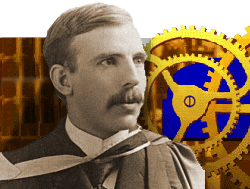
Photo by cstmweb
In a sequence of experiments from 1909 to 1911, Ernest Rutherford discovered that the majority of an atoms weight was concentrated in the center called the nucleus. He discovered this by completing and analyzing a gold foil experiment. Rutherford fired alpha particles, relatively massless particles consisting of two protons and two neutrons, at a thin sheet of gold foil. Rutherford wanted to measure how much the alpha particles were deflected because the alpha particles have a positive charge and the electrons have a negative charge. The electrons were expected to slightly alter the trajectory of the fired alpha particles. Contrary to Rutherford’s hypothesis, the alpha particles were hardly deflected. After analyzing the experiment, Rutherford concluded that the mass of the atom was not evenly distributed as previously thought. The mass of the atom, in fact, was highest in the center of the atom called the nucleus. Rutherford’s hypothesis for this experiment was disproved, a key part of Science as a process. It is acceptable in science to hypothesize incorrectly as long as you can explain the correct outcome of the experiment.

Tangerine fruit stalk; Photo by Tatcher a Hainu
In 1838, Theodor Schwann and Matthias Schleiden were sitting together speaking about their study of cells. Schleiden described plant cells as having a nucleus in the center. This directly correlated with Schwann’s observation of animal cells. The two immediately looked at each others slides and came up with a cell theory which stated:
1) The cell is the unit of structure, physiology, and organization in living things.
2) The cell retains a dual existence as a distinct entity and a building block in the construction of organisms.
3) Cells form by free-cell formation, similar to the formation of crystals (spontaneous generation).
In this case, Schwann and Schleiden used many different processes of Science. They Experimented, inferred, and collaborated in order to come to their conclusion.

Louis Pasteur; Photo by Euclid vanderKroew
Louis Pasteur, a French scientist, disproved the theory of spontaneous generation. This theory stated that living organisms could be made from non-living matter. In order to disprove this, Pasteur boiled meat broth into a flask and shaped the flask into an S shape. Air could enter the S shaped flask, but small microorganisms could not. After many days, as expected by Pasteur, no organisms grew in the broth. In the broth that Pasteur left in a regular open flask, however, organisms grew. This proved that organisms couldn’t just appear. Pasteur hypothesized correctly and accurately conducted an experiment to prove his hypothesis. This was one of the landmark experiments at the time, disproving a common theory.

Photo by Roberto F
Karl von Frisch, an Austrian ethologist, studied honeybees and showed that they use dance to communicate food locations to other bees. Von Frisch noticed that when one honeybee found food, others appeared around the food. He then studied the bee’s movements when it found the food. He observed two different movements or dances. A round dance, which tells other bees to search for food close to the hive and a waggle dance which told other bees the direction and distance to fly toward the food. This study on a population of honeybees helped scientists further understand the movement and food searching methods of the bees. Von Frisch mainly used the scientific process of observation and analysis to reach his conclusions on honeybee dances.

Photo by Storm Crypt
Recently, Harvard University has conducted studies on invading, nonnative plant species, especially those in Massachusetts. The Alliaria petiolata, a common invader in Massachusetts’s forests. This plant threatens other local plants such as sugar maple and breech in the forest. They also studied that the Alliaria petiolata spreads in low light areas. The study of the population of plants in Massachusetts forests help Harvard scientists figure out how to get the nonnative species out and how to help the native plants survive. These scientists observed the plants for hours in order to come up with a hypothesis on what the invading species is doing and a way to help the native species survive.

Photo by KTVee
In 1988 James Lovelock published a book speaking about his Gaia hypothesis. This hypothesizes that all living things have a regulatory effect on the earth’s environment that promotes life. Lovelock came upon this hypothesis while looking at the atmosphere of Mars in its equilibrium. He analyzed that the earth’s atmosphere was never in equilibrium. This highly controversial hypothesis has not been proven. Most scientific discoveries start out as unproven hypothesis. Scientists then conduct experiments to prove or disprove hypothesis and eventually come to a final conclusion.
]]>
by Rose
Hi everybody! Wow… It’s been a while since my last blog post – I can’t believe it’s already been almost two years since I took AP Bio! It feels quite surreal writing this post as a college student.
First, to introduce myself: Hi, my name is Rose Kim. Currently, I am a freshman at Johns Hopkins University and I plan on majoring in behavioral biology, a subject which I first encountered in Ms. Baker’s AP Biology class during my junior year in high school. The subject had piqued my interest so much that I decided to spend four years learning more about it! Haha, anyways, I was asked by Ms. Baker to talk about my college experience so far and I am more than happy to do so.
Last September was the freshman move-in/orientation at Johns Hopkins University. The experience was exactly the way everyone described it to be – chaotic, nerve-wrecking, exciting, fun, and extremely exhausting. Hundreds of faces and names go by super fast and all the events they plan for you go by in a blur. As exciting as the first few weeks of school were, once you settle down and have things mellowed out is when the fun really starts. You don’t have to spend so much time trying to remember names and worrying about whether you’ll get lost and etc.
For my first semester at Hopkins, I decided to take Chemistry, Calculus, Psychology, Biology Workshop, and a writing intensive course. Luckily, Hopkins doesn’t have a core curriculum so I could take whichever courses I wanted to. As I am not a big ‘math person,’ to be honest I have to say that I did not enjoy chemistry and calculus as much as I would have liked.
In college, one lecture class has about 250 students in it and the information goes by really fast. We would cover about 3 chapters in an hour, about three days a week. At first it took me a while to get used to the speed and the way the professors taught. In high school, the teachers are very careful about making sure the students understand and take in the subject but in college, the professors don’t really care whether you’re in class or not. This realization hit me like a ton of bricks because finally, after years of supervision from teachers and parents, it was all up to me (and only me) to make sure I do well.
The freedom to do whatever I wanted was quite overwhelming. I had to learn to discipline myself to keep up with the readings and to make sure that I knew the information and to not spend too much time playing. However, if you go to lecture and take good notes, it’s not that hard (Duh). At first the fact that the responsibility is ALL yours scares the heck out of you, but eventually you’ll learn to deal with it and have fun in the process.
Out of all the courses I took in first semester, I would have to say that Psychology and Bio Workshop were my favorites. Because I had such an awesome AP Bio teacher, I was able to use my AP credits to exempt out of the boring introductory biology courses and labs. This allowed me to delve deeper into all the other interesting bio courses that JHU had to offer. Bio Workshop was a course that covered the current trends in biology by inviting different guest speakers to come and talk about their studies. It was truly inspiring to see just how passionate each speaker was in the subject they talked about.
Those of you who have taken a course with Ms. Baker would know that she loves birds. There are many bird paraphernalia decorating her room and she gets excited when someone brings up a particularly interesting question or comment about them. Coincidentally, the first guest speaker for my Bio workshop class was Professor Gregory Ball and the funny thing was that he studies animal behavior, specializing in the study of birds. I think his love for birds almost surpasses that of Ms. Baker’s. His lecture was both fascinating and funny – he was extremely charismatic and shared these hilarious stories about misunderstandings that occurred while he studied and discussed his research on the ‘Blue-Footed Boobies’ and the ‘Great Tits’ (Both of which are actual bird names).

photo by Max xx
We also learned about the behavior of different birds during mating season and about different types of birdsongs. It was interesting how experiences in college could relate to those in high school in such an unexpected way. It was really cool to see how he used the same clips that I saw during my AP Bio class (If Ms. Baker hasn’t shown you the clips of the different birds of paradise, you should ask her to because they’re absolutely amazing. Also, the clip of the lyre bird is pretty awesome too). It felt nice to know most of the answers to the questions he asked, such as “Why do birds sing?” “Are there local dialects of birdsongs? Why or why not?” and other thought-provoking subjects such as brood parasitism and what it shows us about the process of learning amongst certain birds (I’m sure you guys would have no problem answering these too, right?). After that lecture, the professor’s enthusiasm for birds was almost contagious.
Overall, I think I really enjoyed that course. We covered a variety of different areas related to “today’s” biology – from bird songs and animal behavior, to last year’s controversy about the recipients of the Nobel Prize in Physiology and Medicine, to the genetics of breast cancer and the current research going on to help prevent and cure it.
Psychology was also another course that I really loved. Through this course, I was able to participate in a variety of different psychology experiments. For one, I had to stare at a blank computer screen for about 80 minutes straight in a small dark room by myself. Periodically, a jumble of letters and numbers (about 40 of them) would flash for a second and the objective was to spot which number was the biggest amongst the jumble. I thought I was going to go blind by the end of that exercise. My eyes kept twitching for a bit afterwards. I don’t exactly remember what that experiment was trying to determine, but it was still fun participating – the twitchiness and all.
Something that surprised me about college was how many midterms one had to go through in a semester. After the first month, it seems like there was midterm after midterm after midterm; about one each week for different classes. And when you finally think that you’re all done, finals hit you in the back of the head. Also, the weight of each midterm hangs over your shoulder like a heavy weight. In each class, there’re about 3 or 4 midterms and a final. And that’s it. No quizzes or homework grades to balance things out. Therefore, even failing one midterm can be the end of that course.
With this much pressure, it was hard getting used to the fact that I had to count on myself to keep up with the readings and lectures in order to be ready for a midterm. It’s so much easier to just forget about reviewing the book because the professor doesn’t care, but this mind-set gave me a lot of stress afterwards during finals week. I’m still trying to get used to it for second semester and I hope that this year, it’ll be much easier to prepare myself.
Another thing that I would like to say to all the AP students is that although AP may be tough, trust me when I say that it’s much easier than taking a biology course in college. The information is pretty much the same, but the intensity and pace is a whole different level. It’s usually also less interesting because the information goes by so fast (and it’s a repeat of what you’ve already heard). So please take my advice when I say to try your hardest on that AP exam! It’s so much better to use your AP credits to exempt from wasting a year of precious college time to retake and re-learn a course that you should already be familiar with when you can broaden your options and take more interesting courses to help make your freshman year more intriguing (and worth-it, money-wise!).
Therefore, Good luck on your exams! I hope you will all give a 110%!
]]>
photo by Diego Fontaneto
by Stephen
In a nut shell, sexual reproduction increases genetic variation and allows organisms to evolve in changing environments by pairing beneficial traits together which would in turn get passed on to subsequent generations and to do away with harmful variations. Asexual reproducing organisms create exact replicas and in theory would be unable to adapt to changing environments.
Yet this article has shown that the bdelloid rotifer which produces asexually has adapted to several separate environments. Bdelloid rotifers are small animals that are around .05nm in length that reproduce asexually by means of parthenogenesis. Parthenogenesis is the development of the female egg without fertilization from the male sperm.
Bdelloid rotifers have survived for over 100 million years and make up 380 distinct entities. This challenges the ideas of scientists that sexual reproduction is essential for long term success and diversity.
To test if bdelloid rotifers evolve and branch into distinct entities, scientists created an ancestral tree that mapped the evolutionary changes. They did this by measuring the trophi (jaw sizes) of the rotifers and analyzing mitochondrial cytochrome oxidase and nuclear 28S ribosomal DNA sequences.
The results showed that bdelloid rotifers are monophyletic which means that all the descendents come from a common ancestor. By analyzing the evolutionary tree, researchers showed genetic clusters which “represent independently evolving entities.” This means that the asexually reproducing bdelloid rotifer evolves!
The researchers argue, this study “refutes the idea that sex is necessary for diversification into evolutionary species.”
Do you think there are other organisms like the bdelloid rotifer that have yet to be discovered? Do you think that these separate “entities” should be classified as species? Can you find any other asexually reproducing organisms that have branched to form new species?
]]>
photo by Mark Lorch
by Curtis
Not too many people ever think about the multitude of diseases which may be lurking in that piece of chicken you just sat down to. However; it may be wise to think about it because a new study has found that around 40 billion commercial chickens may be carrying or susceptible to horrible diseases.
This is due to the fact that these chickens breed over and over again with each other, and because of this half of the genetic diversity that is possible in the chicken genome is lost. One of these diseases is the ‘bird flu’ or Avian Influenza which William Karesh, head of the Field Veterinary Program of the Wildlife Conservation Society, stated that “There are more [bird] flu infections in more countries than ever before.” In other words, the problem of the bird flu is not going away.
A study was conducted with 2,500 chickens where the variety of genes was compared between different types of chickens. In some of the most extreme cases, the commercial chickens (those raised for meat and eggs) were found to have only about 10% of the genes which were carried by other free range chickens. This means that 90% of the genes had been lost due to confined breeding habits. The average loss of genes was around 50%. Hans Cheng of the US Department of Agriculture and also an Avian disease specialist who conducted this study said that the “commercial stock may lack the genetic diversity necessary to combat new and emerging diseases.”
Bill Muir, Purdue University animal sciences professor, who was also part of the study said that it is important to protect the non-commercial species of chickens in order to interbreed the two to keep disease resistance up along with genetic diversity. Muir stated that “traits such as disease resistance may be found among the rare alleles of other (non-commercial) birds.”
Many scientists are encouraging an immediate interbreeding of chickens in order to prevent the “pathogenic avian flu viruses.” Poultry consumption in the US, per person, has never been higher. It would be a disaster if poultry production had to immediately cease due to health concerns. Cheng states that “this would greatly impact both the poultry industry and human health.”
Do you believe that these are valid concerns? Why are these reports just now coming out? Are there other sources of data that back up the information provided in this study? Does this cause you to worry about the chicken you are eating? Are there other types of agriculture (cows, sheep, etc.) that are at risk for these types of diseases?
]]>1.Each species produces more offspring than can survive.
2.These offspring must compete with each other for limited resources required to survive.
3.Organisms in all populations vary in alleles and are different.
4.The individuals with the most favorable traits or variations are the most likely to survive and therefore produce more offspring.
Molecular
Genes are the units that help code for proteins within an organism. Evolution has seen the selection of specific genes that code for specific proteins over less desirable genes. For instance, the gene that codes for blindness in the blind cavefish is chosen over the gene for eyesight. The reason for this is that one of the two genes involved in senses of the fish must be traded for the others. In easier terms, the eyesight of the fish must be sacrificed so that the jaw and taste buds can develop. In this case, the pleitrophy gene that controls this development is slightly inhibited by another gene. The only reason the inhibiting gene is selected is because while it inhibits eyesight, the fish can rely on its other sensory organs, which proves to be successful.
Cellular

Photo by Akay
On a cellular level, eukaryotic cells are complex in comparison to prokaryotic cells. According to the endosymbiotic theory, the evolution of organelles originated from a prokaryotic cell that joined with separate prokaryotic cells. The organelles in the cell proved to be exceptionally helpful, such as the mitochondria, which supplied it with energy. The earliest mitochondrion is believed to have begun as a very primitive bacterium. With a source of internal energy, the eukaryotic cell was more favorable and through natural selection, became more frequent.
Organismal

Photo by Kaptain Kobold
The kidneys are responsible for filtering the wastes of the blood and reabsorbing nutrients during the process. Some animals have evolved to have excretory systems to compliment the environment that they live in. For instance, in dry and arid environments, many animals have an extra complex collecting duct, where the most water is reabsorbed during excretion, to maximize the amount of water conserved. Those organisms that have the systems to do this can survive longer and are favorable to the environment because of their success in retaining water, which is a necessity in their environment.
Population

Photo by Kaibara
One of the easiest examples to observe since it reproduces so quickly, bacteria helps explain genetic drift in populations. If you were to put a culture of bacteria in a nutrient rich environment, they would reproduce. But if you added an antibiotic into the environment that killed most of the bacteria, only the bacteria that had alleles that made them resistant to the antibiotic would survive. Since the bacteria that died did not have a high fitness, they were not able to continue contributing their genes to the pool. Only the surviving bacteria will be able to pass on their genes, which include resistance. This, in time, will lead to a whole generation of antibiotic resistant bacteria that has evolved from the original population to one made of resistant genes.
Community

Photo by Thomas Hawk
The predators and prey evolve together, the prey trying to stay one step ahead of the predator, and the predator trying to catch up. In the case of wolves and rabbits, wolves evolve mechanisms to help them survive by obtaining food such as speed, stealth, camouflage, and excellent sensory senses. Likewise, the prey, rabbits, develop similar mechanisms to aid in avoidance and escape of a predator. Any trait such as long legs to run or hop faster will enable the prey to escape its predator, and pass its genes to its offspring. Those that are eaten obviously were not fit to their environment and their genes, which did not help them, will not be passed on.
Biosphere

Photo by Brent Danley
The globe is made up of many different climates and geographic features, each factors of a specific biome. With in a biome, an ecosystem of organisms exists which specifically suit that particular biome. Producers within the biome have evolved features that give them high evolutionary fitness. The consumers that feed off of these producers are also well suited to their biome, as discussed in population. With the combination of all of the organisms well suited to their environment in one biome, there is an ecosystem that is specifically designed to survive there. If you were to take a kangaroo and place it in the arctic, the kangaroo would not be able to find the resources it needs to survive. The food that it lives off of, the habitat it is used to and the mates it needs to reproduce are not there. That is why each biome is made up of biotic and abiotic factors that specially suit the surrounding ecosystem.
]]>
Photo by INoxKrow
by Lauren K
Next time you’re about to get a lecture about your grades, try blaming it on your genes! An old study of inherited intelligence of fraternal and identical twins has brought to light how much of your intelligence is due to genetics and the environment.
Surprisingly, the study of inherited intelligence isn’t as recent as you may have thought. According to a recent study directed by Dr. Bouchard at the University of Minnesota, evidence supports that nearly 70 percent of your intelligence is inherited! Studies beforehand only suggested fifty percent, but this twin study pointed towards inheritance being, “the overwhelming contributor to intelligence test scores.”
Now, only six years ago and using more up- to- date technology, Dr. Bouchard conducted a lengthy study also using both kinds of twins with an MRI to distinguish areas of the brain. These were their results.
In the area of the brain that specializes in language, and another area mostly for perception, identical twins appeared to have ninety-five to a hundred percent shared. The cognitive area of the brain seemed to display the closest percentages. Dr. Thompson believes that the findings show that environment has little to do with intelligence. In fraternal twins, the percentage was lower, but still supplied evidence that intelligence was related to inheritance. So far, a single gene has not been found to specifically code for intelligence, but the evidence does show that inheritance is a factor.
Be sure to know that with many items in science, there are contradicting hypotheses and many doctors agree, disagree, and go back and forth on a decision. So in short, while there is prominent evidence that intelligence is inherited, there are some doctors who disagree, and others who say it’s a mixture of inheritance and environment.
December 12th, 2007 at 9:23 pm
Wow that is really interesting. I agree and disagree on this topic. I do believe that some intelligence is inherited, while another part of it is just your ability to focus in school. If you have good grades, it doesn’t mean your parents are geniuses. You have to work at school, you can’t just expect to do well because your parents did.
December 12th, 2007 at 9:49 pm
I was just talking to my older sister and she said when she was in college they did a study on this. They ended up saying that it was your parents intellegence on when to have a child that affects your rate of intellegence. So if you were born while your parents didn’t have a stable finacial plan to support a child you would have a worse intellegnce rate. This sounds really weird and dosent sound to accurate though.
December 12th, 2007 at 10:16 pm
Wait, I have a question for Roger: Are you saying that your parents intellegence on when you are born effects your intelligence or are you saying that your parents intellegence on HAVING you effects your intellegence?
December 12th, 2007 at 10:40 pm
Wow this is really suprising to me. I had heard to really pretty people make an ugly baby so I thought two really smart people make a not so smart baby. But it makes since that intellegence is inherited just many physical characteristics.
December 12th, 2007 at 10:56 pm
i do think that your “ability” to be smart is inherited but i think i bigger part is based on the persons personality and liefstyle. Some people may enjoy school, though i dont think i know anyone who does….anyway, i think the main factor in someones grades are how much they put into their schoolwork.
December 12th, 2007 at 11:00 pm
This is very interesting. Good job Lauren! i agree that some intelligence is inherited but some is just the want to apply it. You could be the smartest person, but if you don not apply yourself and are just lazy you will never come across as intelligent. Some people can also be born with neurological disabilities, that does not mean their parents were stupid or had these same problems. I know of people that have learnig disabliites and neurological issues and their parents and sibilings do not. It is also possible for peole with not very smart parents to be absolute genuises. What really is intelligence defined by? Is it something actually instilled into your DNA or is it just the willingness and want to be smart?
Also, I heard( and this could be totally wrong) that IQ is just the measure of your brains capacity to store knowledge and information, is this true?
December 13th, 2007 at 8:07 am
This is really cool! I have never herd of intelligence being inherited. That would make it really cool if you had really smart parents. Even though a person might be handed down intelligence they still need to work for it because with out using your ability and trying to make it better you are just wasting the ability God has given you. I don’t really believe someone can be naturally smart enough to go through school with high A’s and not study or review for anything., but if there is someone please let me met them.
December 13th, 2007 at 5:37 pm
This is an interesting topic and if intelligance is inherited than that will be really cool. Does this happen in every family or is it in some or in just most families? I have seen some families that have very smart parents and very smart kids so i was wandering about this.
December 13th, 2007 at 6:51 pm
Very nice Lauren! That’s really fascinating beacuse I always just took it for granted and thought that it was almost polygenetically inherited from someones parents. It never really ocured to me that envirornment also very well could play a large factor in it. In my family, I’m the first born child and I’m very like my dad in terms of phenotype, but I usually make grades closer to those that my mom used too make, but not quite as high. But my sister has a phenotype much more like that of my mom and she makes better grades than either me, my mom, or my dad. So it would make sense that our phenotypes expressed similar behaviors in intelligence like our parents, but becasue of how I’m not just as smart as my parents and nor is my sister, it would make sense that the environment that we grew up in (which has always been school first!) would affect us like that. Great post!
December 13th, 2007 at 8:07 pm
Wow, good post. I agree with Ms. Baker, about the polygenic trait part. I mean how could one gene hold all the intelligence that has been passed down from your parents. Also wouldn’t the parents of a special ed kid be ‘dumb’. Well I was a little confused so went and did some research and this is the website i thought provided great examples and evidence
http://sg.answers.yahoo.com/question/index?qid=20070117072939AAqeKxj&show=7
December 13th, 2007 at 9:46 pm
Stevie – how are you not as “smart” as your parents? Where is your evidence for this? Grades? In a couple of days I’ll publish a post with evidence that shows success in school and life has less to do with being “smart” and more to do with how hard you work for it.
December 14th, 2007 at 1:19 am
Hmm this is interesting. I can sort of understand this and it would be neat to find out what kind of gene is passed down for intelligence. However, this does not make too much sense for me. My mom went to Harvard and Stanford, which alone says that she is pretty smart, and my dad is really intellegent. BUT, there is me, who is not the brightest bulb on the tree. I mean i hope that i get some of their brains later on, because i could surely use them!!
December 14th, 2007 at 4:57 pm
this makes alot of sence cause whenever people say oh your look/act exactly like you mom/dad i always wondered if you could get smarts from them to! good job lauren! i so have a question though. why do we get genes from one parent mostly then both?
December 15th, 2007 at 8:57 am
I think that yes your parents play a role in your passing intelligence in you however its you thats basically in school so you have a bigger role. I mean my parents are extremly smart and I am not as smart but my older brother is majoring in areospace and egineering and has been smart in math since forever. Where as for me I am very clueless about math. I personally think that it has to do with the enviroment your growing up in now ( whether its smart or dumb) and your parents ( not as much).
December 15th, 2007 at 12:52 pm
Intresting post Lauren! However, i do have to say that even though you intellegence maybe somewhat inherited, you still have to put forth effort, in order to suceeded! For example, there was a set of twin sisters at my school last year, but they were completely different as far as their grades! One of them had all honors classes, and still mananged to make all A’s, while the other had regular classes, and barely passed two of them! This obviously shows that one was lazy and the other put forth a ton of effort! They both are pefectly capable of exceling in school, if they wanted to, but only one of them chose to pursue it!
December 16th, 2007 at 3:55 pm
i was thinking about what stevie was saying and….i think he is mainly right. i mean everyone does have FULL potential to make good grades in school…but yes it does matter whether we are smart or not but also…school puts alot on pressure on us as well. like basically GRADES are our whole life. and some people care and some people dont….im the youngest in my family and my sister is exactly like my dad good grades and everything and i was telling my mom about this post and she took out her old report cards and they we’re almost exactly like my past….so i do believe after this that it is genetics and like stevie said your enviornment as well.
December 16th, 2007 at 8:38 pm
I never knew that! Now I have an excuse for my grades! Just kidding! haha but trust me that explains a lot! But as most poeple said people still have a chance at getting good grades it just might be challenging for the poeple who don’t have that gene. Is that why there is always those really smart poeple in the grade that don’t even study and get good grades but those who study really hard and dont?
December 16th, 2007 at 8:59 pm
Morgan – are those that are studying that hard studying the right things? Students often don’t know how to study well. I always tell my students who have spent hours cramming THE NIGHT BEFORE the exam that they just WASTED several hours.
Also, for the students that are making great grades without studying – how challenging is the material? The ironic thing is that as they get older and run into more challenging classes, they are actually HURT by their previous easy successes because they get it in their head that they are “smart” and therefore shouldn’t have to study very hard. So they get frustrated when they start to do poorly.
January 14th, 2008 at 2:38 pm
Very pleased to find my photo here. Thanks for the credit
September 23rd, 2008 at 6:36 pm
Ok, I partially believe this is true and false. For one, my dad is a very intelligent and intellectual type of person; I just do not know how he does it! So is his father, my grandpa. But then my mother is the complete opposite of those two. She never did particularly well in school and is not has intelligent. So since both of my parents are completely opposites when it comes to book smart what does that make me, average? Do they level each other out?
My other side is anyone who has a normal brain meaning they do not have any brain diseases can be inelegant or good at something if they study and practice. It is not only that being intelligent is hereditary; you have to put effort into becoming smart. Unless for example you have Down syndrome you can for sure succeed in whatever you want!
http://serendip.brynmawr.edu/biology/b103/f03/web1/rkallon.html
September 24th, 2008 at 8:59 pm
Wow, that makes a lot of sense. I have always heard of people getting most of their intelligence from their parents but I never quite knew if it was correct. I was told that you only get fifty percent of your intelligence from your parents, not seventy-five. I was really suprised to see that.
Even if you are born from not so intellectual and brillant parents, you can still apply yourself and change your future. People who have parents that got C’s and D’s can still study and work hard and get good A’s and B’s.